


Case Studies

How the Plan Comes Together

These case studies illustrate how the Bucket Strategy and Beacon 360 Process were applied to actual client retirement situations. Names, images, and certain identifying details have been changed to protect client privacy. Individual experiences and results vary.

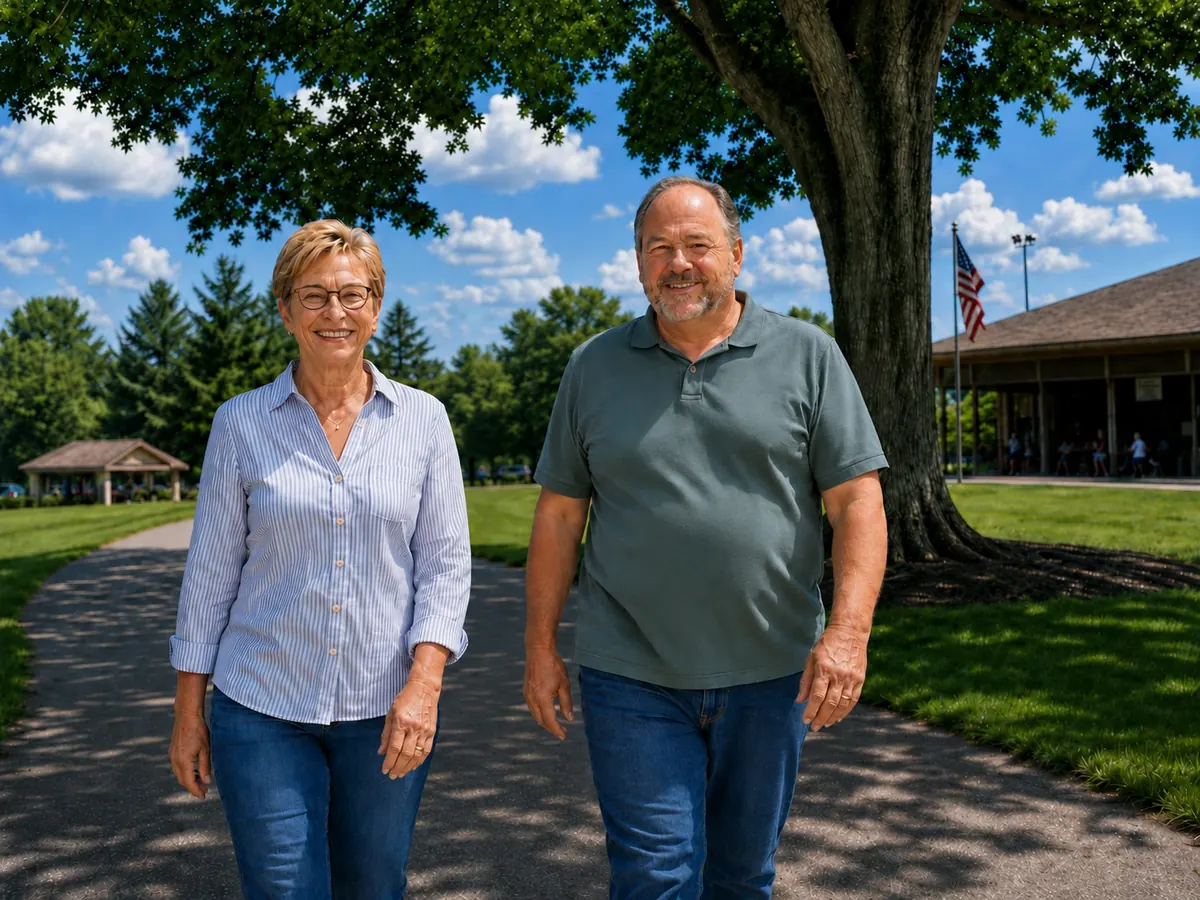
A retired couple walking together at a local park
Model image representing Steve and Cindy — pre-retirees, age 60
Case Study 01 · Pre-Retiree

Pre-Retiree, Age 60

When planning began, they were approximately three years from retirement and concerned about a bear market arriving at the wrong time while still needing long-term growth to keep up with inflation.

Read Full Case Study
Model image representing Jim and Donna — retirees
Case Study 02 · Retired

Retirees, Ages 65 & 64

Their planning focused on maintaining their lifestyle, preparing for the “Widow’s Tax Penalty,” and creating reliable income from a portfolio exposed to market swings.

Read Full Case Study
Model image representing David and Karen — retirees, age 70
Case Study 03 · Stay Retired

Retirees, Age 70

After selling a business, they used the years before RMDs to consolidate accounts, complete Roth conversions (opens in a new tab), and establish a more coordinated retirement-income strategy.

Read Full Case Study
Model image representing Steve and Cindy — pre-retirees, age 60
Case Study 01 · Pre-Retiree

Pre-Retiree, Age 60

The Clients

At the time planning began, Steve was 60, and he and Cindy were approximately three years from retirement. Steve was the natural worrier — he tracked their account balances closely and felt they needed a few more strong market years before he could feel comfortable retiring. Cindy’s concern was quieter and more practical: whether their money would continue to support the same lifestyle years into retirement.

Goal

Their goal was to retire in approximately three years with income they could rely on — even if a bear market arrived at the wrong time — while keeping enough of the portfolio positioned for long-term growth and to help keep up with inflation. With approximately $1.25 million saved at the time, the plan was built around a target of approximately $85,000 a year to start, with the intention of increasing that amount annually to help keep pace with inflation. Approximately $5,000 a month (about $60,000 a year) was expected to come from Social Security, claimed at retirement rather than delayed, with the remaining approximately $25,000 a year planned to be drawn from the portfolio.

Underneath the numbers, the real goal was emotional as much as financial: to be able to live through a difficult market without it turning into a difficult decision.

Challenges
  • Two opposite risks at once: the Bear Extreme — a downturn arriving early in retirement and forcing the sale of assets that are down — and the Inflation Extreme, the slow erosion of what each dollar buys (the five-dollar cup of coffee that may cost close to eight dollars in fifteen years).
  • Claim now or wait: weighing Social Security at retirement (approximately age 62–63) against delaying for a larger monthly benefit, and understanding how that choice could change how much of the approximately $85,000 annual income need would fall on the portfolio versus Social Security.
  • Arguing the same point from opposite sides: Steve wanted everything aggressive to outrun inflation; Cindy worried the money they’d need soon could be caught in a downturn. Both were right about a different part of the problem.
  • The emotional weight of uncertainty: knowing intellectually that markets have historically recovered is not the same as feeling okay while headlines say otherwise.
Approach
  • Separate income by time horizon: different dollars were given different jobs based on when they would be needed, rather than forcing one portfolio to do two conflicting jobs at once.
  • Pre-Bucket (Years 0–4 Before Retirement): Bucket One was fully funded ahead of the actual retirement date to cover approximately five years of planned retirement income. This was designed to reduce the likelihood that short-term market volatility would disrupt their planned retirement date.
  • Bucket One (Years 1–5, the “Now” bucket): Approximately $125,000 (about 10% of the portfolio) was held in high-yield cash and money-market instruments, intended to fund the approximately $25,000/year portfolio draw once Social Security began. This portion was kept out of the market entirely, where a bear market could not directly reduce it. Income was not taken from a growth asset.
  • Bucket Two (Years 6–10, the “Soon” bucket): Approximately $118,482 was held in a 5-Year Multi-Year Guaranteed Annuity (MYGA) for capital preservation, one step behind Bucket One. Fixed annuity guarantees of this kind are backed solely by the claims-paying ability of the issuing insurance company, are not FDIC- or SIPC-insured, and withdrawals in excess of contract terms may be subject to surrender charges.
  • Bucket Three (Years 11+, the “Later” bucket): The remaining approximately $1,000,000 (about 80% of the portfolio) was allocated to diversified equities and real assets, given a longer time horizon and a more growth-oriented posture, so time — not market timing — was intended to help address rising prices.
  • Annual bucket strategy session: A standing yearly check-in was established to confirm which dollars were intended for the next few years, which were intended for later decades, and whether those assignments — and the inflation adjustment to their planned income — remained appropriate.
  • Annual tax strategy session: A parallel yearly check-in reviewed potential Roth conversion opportunities, tax-efficient withdrawal sequencing, and future RMD exposure, to help confirm that the planned withdrawal order and any conversion decisions still made sense given that year's tax bracket.
Bucket Allocation Summary
BucketPurpose & Time HorizonApprox. AllocationAsset Strategy
Bucket 1 (“Now”)Years 1–5 (~$25,000/yr planned draw)~$125,000 (~10%)High-yield cash / money market
Bucket 2 (“Soon”)Years 6–10~$118,482 (~10%)5-Year MYGA — capital preservation
Bucket 3 (“Later”)Years 11+~$1,000,000 (~80%)Diversified equities and real assets — long-term growth

Figures shown are approximate, rounded, and provided for illustrative purposes only.

Planning Results
  • Steve and Cindy entered retirement on their original schedule with their Pre-Bucket intact: Bucket One funded their approximately $25,000/year planned withdrawal from the Pre-Bucket, while later buckets remained positioned for growth.
  • When the 2022 bear market arrived (the S&P 500 declined roughly 24% over that stretch, cited here as historical context and not as a projection of future performance), Bucket One did not decline in value because it was not invested in the market, and their planned monthly withdrawals continued on schedule without requiring the sale of longer-term growth assets.
  • Bucket Two, held in its fixed 5-Year MYGA, was effectively unaffected by the market decline; that guarantee reflects the claims-paying ability of the issuing insurance company rather than any market-based protection.
  • A later bucket did decline in value — but it had roughly six years (about seventy-two months) remaining before its dollars were needed, longer than a typical historical market recovery period, so the decline had time to potentially recover rather than forcing a sale at a loss.
  • The review turned a difficult market year into a non-event for the couple’s planned income: a market downturn did not require a change to their distribution decisions.

Client Case Study Disclosure: This case study is based on an actual Lighthouse Financial Strategies client household. “Steve” and “Cindy” are pseudonyms; their photographs, locations, occupations, and certain other identifying details have been changed or generalized to protect their privacy, and the individuals pictured are not the actual clients. No compensation was provided to the client in exchange for sharing this story. The planning circumstances, process, and experience described reflect this household’s actual situation; certain dates, dollar amounts, and other figures have been rounded or simplified for educational presentation and are approximate. Market figures are provided only as historical context and are not a projection of future performance. Fixed annuity (MYGA) guarantees are backed solely by the claims-paying ability of the issuing insurance company and are not insured by the FDIC or SIPC; surrender charges and other contract limitations may apply. This client’s experience is not representative of the experience of all clients, is not indicative of future performance or success, and should not be considered a testimonial or endorsement of advisory services. All investing involves risk, including the possible loss of principal.
Model image representing Jim and Donna — retirees
Case Study 02 · Retired

Retirees, Ages 65 & 64

The Clients

Jim spent more than twenty-six years as a structural engineer, designing bridges built to hold under load. He and Donna approached their retirement plan the same way he approached everything — stress-tested for the scenario most couples avoid looking at directly. Their approximately $6 million portfolio was split between roughly $1.5 million in traditional IRAs, $4 million in taxable brokerage accounts, and $500,000 in Roth IRAs. Jim’s deepest concern was never the market. It was making sure that, if he was gone first, Donna would never have to face the plan — or the tax code — alone.

Goal

Their goal was to build a retirement income plan that did two jobs at once: keep approximately $100,000 a year flowing reliably regardless of market conditions — with about $5,200 a month (roughly $62,400 a year) expected from their combined Social Security and the remaining approximately $37,600 a year planned to be drawn from the portfolio, to start, plus an intended annual inflation increase — and prepare financially for the surviving spouse.

Jim wanted the plan engineered so that if Donna ever had to walk the bridge alone, the income would continue uninterrupted — and the Widow’s Tax Penalty (the “Double Squeeze”) would already have been planned around before it ever arrived.

Challenges
  • The Double Squeeze (Widow’s Tax Penalty): when the first spouse dies, income drops and taxes rise at the same moment — the smaller of the two Social Security (opens in a new tab) benefits stops permanently, reducing the approximately $5,200 monthly household benefit, while the survivor’s filing status shifts from Married Filing Jointly to Single, roughly halving the bracket thresholds.
  • A sizable pre-tax IRA — approximately $1.5 million of the $6 million portfolio — pointed to higher future RMDs and greater forced taxable income for a single filer.
  • They needed to decide which accounts to draw from, and in what order, across a tax landscape that would change permanently at the first death.
  • They faced a narrow, time-sensitive “December window”: in the year of a spouse’s death, certain tax moves must be completed before year-end while joint filing status still applies.
Approach — The Tax Cables
  • The Roth foundation: Both held Roth IRAs — approximately $500,000 combined — opened in their mid-fifties and past the five-year threshold, which gave Donna a source of tax-free withdrawals to help manage her bracket later.
  • Six years of paced Roth conversions: Each year, they converted up to the top of the targeted 12% bracket without crossing into 22%. The completed conversions steadily reduced the pre-tax IRA balance and future RMD exposure.
  • Account sequencing (IRA first, non-qualified second): counterintuitive, but across the full arc of retirement it left the survivor in a stronger position than protecting the pre-tax account first.
  • QCD readiness (70½+): Charitable giving was structured through Qualified Charitable Distributions (opens in a new tab) to satisfy part of future RMDs without increasing AGI.
  • The December window conversion: in the year of Jim’s passing, one final conversion at joint (12%) rates — a move that would have cost roughly 22% one month later as a single filer.
  • Bucket Strategy already running: The approximately $37,600 portfolio-funded portion of their planned annual income was held safe and liquid in Bucket One, outside the market, so planned income was not drawn from a growth asset and continued on schedule.
Planning Results
  • Household income of approximately $100,000 a year continued, combining Social Security with Bucket One income that was held safe and outside the market, without interruption tied to market conditions.
  • Six years of conversions completed within the targeted 12% federal tax bracket reduced the amount remaining in the pre-tax IRA and helped reduce Donna’s subsequent RMD exposure.
  • The year-of-death December conversion captured joint (12%) rates one last time — an estimated tax cost roughly half of what the same move would have cost a month later as a single filer.
  • Roth assets continued to give Donna flexibility to manage her tax bracket as a single filer, even after her share of household Social Security income decreased.
  • The strategy also positioned a larger portion of the remaining assets for potentially more tax-efficient transfer to their children, subject to future tax law and each beneficiary’s circumstances.
Client Case Study Disclosure: This case study is based on an actual Lighthouse Financial Strategies client household. “Jim” and “Donna” are pseudonyms; their photographs, locations, occupations, and certain other identifying details have been changed or generalized to protect their privacy, and the individuals pictured are not the actual clients. No compensation was provided to the client in exchange for sharing this story. The planning circumstances, process, and experience described reflect this household’s actual situation; certain dates, dollar amounts, tax calculations, Social Security information, and other figures have been rounded or simplified for educational presentation and are approximate. Tax laws, filing thresholds, Medicare rules, and Social Security provisions are subject to change, and this material is not intended as tax or legal advice. This client’s experience is not representative of the experience of all clients, is not indicative of future performance or success, and should not be considered a testimonial or endorsement of advisory services.
Model image representing David and Karen — retirees, age 70
Case Study 03 · Stay Retired

Retirees, Age 70

The Clients

At the time planning began, David and Karen were both 70 and retired. They wanted steadier after-tax income, less tax drag, and a simpler, consolidated portfolio before RMDs began at 73.

Portfolio Composition

Following the sale of their business, their approximately $19 million in assets was split roughly as follows: approximately $14.5 million (about 76%) in a taxable, non-qualified brokerage account — net proceeds from the sale, after capital gains taxes were paid, held in high-quality equities, fixed income, and cash equivalents; approximately $3.5 million (about 18%) in traditional/rollover IRAs, accumulated through 401(k)/SEP-IRA contributions and profit-sharing rollovers over more than 30 years of running the company; and approximately $1.0 million (about 6%) in Roth IRAs, built through prior conversions and legacy accounts using backdoor and mega-backdoor Roth strategies that Mike coordinated for David and Karen while David ran the company.

Goal

Their goal was to create a coordinated retirement-income strategy that consolidated their accounts, addressed future RMD exposure, considered Medicare (opens in a new tab) IRMAA (opens in a new tab), and supported their charitable giving — targeting approximately $200,000 a year in planned income to start, with an intended increase of approximately 3% annually to help keep pace with inflation.

David and Karen also wanted to keep the majority of their approximately $19 million invested for long-term growth as a legacy for the next generation, without watching the market every day or worrying that a downturn could disrupt the approximately $200,000 a year they planned to live on.

Challenges
  • Their significant pre-tax IRA balances — approximately $3.5 million — pointed to higher RMDs at 73.
  • Their accounts were scattered across multiple institutions, making it harder to rebalance and plan withdrawals.
  • They had no clear withdrawal order among taxable, IRA, and Roth accounts, which made AGI less predictable.
  • They wanted to remain invested for growth without depending on those same investments for day-to-day income.
Approach
  • Consolidation & simplification (both spouses): Combined old IRAs/401(k)s to tighten control over rebalancing, withdrawals, and future RMDs.
  • Gap-years Roth conversions (ages 70–72, MFJ): Converted each year up to the top of a targeted bracket (e.g., 22%/24%) with the intent of shrinking the approximately $3.5 million pre-tax IRA balance before RMDs start at 73.
  • IRMAA management (per spouse): Modeled the 2-year Medicare lookback and timed conversions/capital gains to keep most years within targeted tiers.
  • Withdrawal order: Sequenced IRA → taxable → Roth — drawing down pre-tax balances first to help reduce future RMDs, while leaving Roth assets to keep compounding for legacy.
  • Asset location: Positioned the more aggressive, higher-growth holdings inside the Roth account, where future growth could compound tax-free for David, Karen, and their heirs.
  • Bucket Strategy (five-year buckets): Set aside the portfolio-funded portion of their approximately $200,000/year planned income in five-year buckets so income would not need to be taken from a growth asset, with the intent of allowing the majority of the approximately $14.5 million taxable account to remain invested for long-term growth even during market declines.
  • QCD setup (70½+): Established Qualified Charitable Distribution procedures so future RMDs could be satisfied without increasing AGI.
Planning Actions Completed
  • Their eligible retirement accounts were consolidated into a more coordinated structure.
  • A defined withdrawal sequence was established.
  • Roth conversions were completed within the targeted annual tax ranges.
  • Near-term income reserves — supporting the approximately $200,000/year planned income — were separated from longer-term growth assets.
  • Qualified Charitable Distribution procedures were established.
Projected Outcomes
  • Their first-year RMD was projected to be lower than under a no-conversion scenario.
  • Estimated lifetime federal taxes were projected to be lower under the modeled strategy, with more predictable after-tax income intended to grow at approximately 3% a year to help keep pace with inflation, subject to future tax law and implementation.
  • The analysis projected fewer years of Medicare IRMAA exposure.
  • Near-term income was intended to be drawn from buckets rather than growth assets, so a market decline would not require selling investments that happen to be down.
  • Larger Roth balances could potentially provide greater tax flexibility for David, Karen, and their beneficiaries.
Client Case Study Disclosure: This case study is based on an actual Lighthouse Financial Strategies client household. “David” and “Karen” are pseudonyms; their photographs, locations, occupations, and certain other identifying details have been changed or generalized to protect their privacy, and the individuals pictured are not the actual clients. No compensation was provided to the client in exchange for sharing this story. The planning circumstances and process described reflect this household’s actual situation; certain dates, dollar amounts, tax calculations, portfolio percentages, and other figures have been rounded or simplified for educational presentation and are approximate. References to future RMDs, lifetime taxes, Medicare IRMAA, income targets, or beneficiary outcomes include estimates or projections based on assumptions and laws in effect at the time of analysis; projected outcomes are not actual results and may change. This client’s experience is not representative of the experience of all clients, is not indicative of future performance or success, and should not be considered a testimonial or endorsement of advisory services.
Schedule a Strategy Call Bucket Strategy